Point Blank (1967)
|
Directed by: John Boorman
Starring: Lee Marvin, Angie Dickinson, Carrol O'Connor, Keenan Wynn IMDB Rating: 8 Written for Perisphere Blog: https://www.perisphere.org/2023/06/02/a-dream-is-but-a-dream-john-boormans-point-blank/ A Dream is But a Dream: John Boorman’s Point Blank
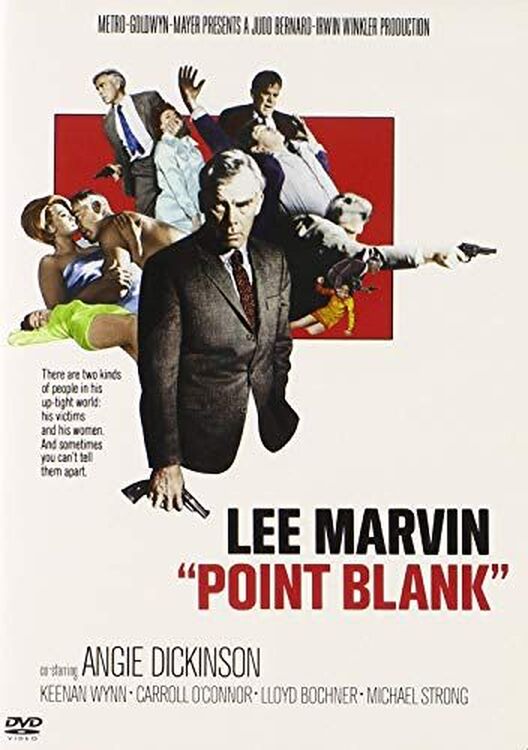
Spoilers Follow! John Boorman’s 1967 fever dream Point Blank has often been cited as the catalyst for the Neo-Noir movement that has ebbed and flowed for more than 50 years. Adapted from the Donald E. Westlake (writing as Richard Stark) novel called The Hunter, Point Break depicts anti-hero Walker laser-focused on recovering the $93,000 in heist money that was stolen from him by his wife and his best friend. When I say laser-focused I mean there is little in the way of exposition or character development beyond Walker verbally or physically abusing anyone in between him and his money. That is not to say what transpires is simple, transparent, or even cohesive. Boorman and cinematographer Philip H. Lathrop disrupt straight-line storytelling with slow motion scenes, jump cuts, and repeat action, all the while bathing the film in Los Angeles’ blinding sun. What is left on the screen, however, is cold, methodical, brutal, and utterly amazing! Credited screenwriters Alexander Jacobs, David Newhouse, and Rafe Newhouse distilled Stark’s novel to its very essence, relocating the story from New York to Los Angeles, altering the timeline to create a non-linear track, and re-calibrating Walker’s relationship with his wife. All the while, they actually softened Walker’s personae. That Lee Marvin perfectly reflects Stark’s description of his hero as “chiseled concrete with an expressionless face” seemingly allows the screenwriters to give him a different name, exchanging Parker in the novel (the first of 24 featuring the character) for the aforementioned Walker. In both cases, neither is given a first name. But that matters little because Parker/Walker is a killing machine hell-bent on revenge |
|
In the great tradition of film noir, Point Break opens just after a heist has gone horribly wrong, but in recasting the rules of noir, the viewer isn’t yet made aware of what we are seeing. Gunshots ring out in a prison cell and a man drops into the shadows while a voice over mutters “how did I get here?” What follows is pure noir as the scene immediately flashes back to a crowded party scene as two friends reunite, then fall to the ground with one pleading for the other to help him. That it is Lee Marvin on the floor being begged by John Vernon is the first of many surprises as the film bounces back and forth in time, repeating some scenes and images, while downplaying seemingly unimportant details until later. As we jump back to the prison, the heist sets into motion, but something’s off, there are echoes, disjointed pieces of the party flashback and haunting voice overs as Walker and his wife share a calming moment of intimacy after completing the heist. The calm is then shattered by the gunshots that set off Walker’s murderous quest for revenge, the scene ending with the seemingly telling words “did it happen? A dream, a dream.”
|
|
|
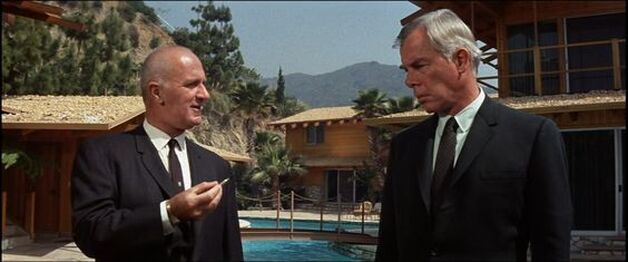
When Walker, shot badly and bleeding, stumbles into the water around what is now revealed to be Alcatraz prison, the story jumps again to a healthy Walker on a boat tour of the prison being told of the impossibility to escape from the island. He is in the company of Yost, a man implied to be from law enforcement and it is already clear something may still be amiss. Yost admits he “wants the organization,” as an offshoot of Walker’s vengeful quest for the organization’s underling who double crossed him. Here the film casts back to the organized and corrupt criminal enterprises in noir classics like Force of Evil or The Racket, but with a modern twist. They are businessmen, sheathed in a silver tower of glass and steel, who are more likely to carry a briefcase and belong to country clubs as carry a gun or actually use one. Reece is a cog in the machine of criminal profit margins, acceptable risk, and emotionless decision making. With Yost as his inner voice, Walker sets out to confront his double-dealing wife, who happens to be shacked up with Reece.
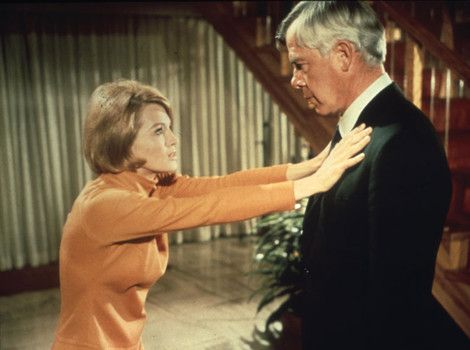
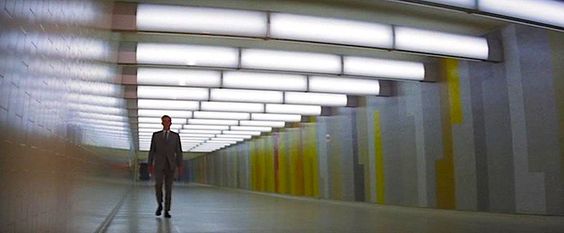
In one of my favorite moments in the film, Walker walks down an unending hallway at LAX, the metronomic beat of his shoes on the tile floor mimicking the ticking clock of a timebomb. Boorman cuts between Walker and his wife getting dressed, as if expecting her fate to come crashing down upon her. Once Walker actually crashes through her door and unloads his pistol into an empty bed, he remains silent as she confesses her guilt and desire to be dead like him. Again, there is an odd detachment in the scene; a wish fulfillment aspect of her longing for death and an admission of love for Walker, which naturally triggers a flashback to their happier time together. All the while, he is stone cold silent which eventually leads to tragedy and death. The next morning is framed by a brilliant camera trick of puling focus through a screen to signify the lack of clarity in Walker’s mind and leading to the timely appearance of Yost once again
In one of my favorite moments in the film, Walker walks down an unending hallway at LAX, the metronomic beat of his shoes on the tile floor mimicking the ticking clock of a timebomb. Boorman cuts between Walker and his wife getting dressed, as if expecting her fate to come crashing down upon her. Once Walker actually crashes through her door and unloads his pistol into an empty bed, he remains silent as she confesses her guilt and desire to be dead like him. Again, there is an odd detachment in the scene; a wish fulfillment aspect of her longing for death and an admission of love for Walker, which naturally triggers a flashback to their happier time together. All the while, he is stone cold silent which eventually leads to tragedy and death. The next morning is framed by a brilliant camera trick of puling focus through a screen to signify the lack of clarity in Walker’s mind and leading to the timely appearance of Yost once again
|
|
Yost is Walker’s spirit guiding the angel of vengeance to balance the scale, appearing each time he needs, a helpful address or a productive suggestion to move him towards his next target. He becomes a talisman for Walker’s progress up the chain of command of the Multiplex Corporation; a sometimes-silent presence shielding Walker throughout the story. The organization, Multiplex Corporation, is referred to throughout, reflecting a condemnation of corporate capitalism as largely criminal in nature.
Starting at the very bottom, the common salesman on the street, a smarmy car salesman no less, Walker connects the dots, climbing the corporate structure floor by floor, until Reece, his primary target, plummets to his death. In one of the most telling scenes of the film, his assault on the Huntley Hotel, Walker becomes ghostlike as he bypasses countless armed guards, subdues two armed men silently, attacks Reece, and swiftly leaves the building as it swarms with cops and hoodlums. Of course, this is all accomplished while obtaining the key piece of information that will keep him hunting after Reece’s death. Boorman shoots the scene in a straightforward and clinical manner, but the essence is purely dreamlike in its implausibility, with Walker ascending to mythic invincibility.
Starting at the very bottom, the common salesman on the street, a smarmy car salesman no less, Walker connects the dots, climbing the corporate structure floor by floor, until Reece, his primary target, plummets to his death. In one of the most telling scenes of the film, his assault on the Huntley Hotel, Walker becomes ghostlike as he bypasses countless armed guards, subdues two armed men silently, attacks Reece, and swiftly leaves the building as it swarms with cops and hoodlums. Of course, this is all accomplished while obtaining the key piece of information that will keep him hunting after Reece’s death. Boorman shoots the scene in a straightforward and clinical manner, but the essence is purely dreamlike in its implausibility, with Walker ascending to mythic invincibility.
|
|
Walker’s almost godlike foreknowledge of an impending double cross by corporate hack Carter is even more telling. Carter is a pragmatist, at one point noting to Walker that “no corporation would assume (Reece’s) debt” after he’s dead, but also realizing that ultimately, “profit is the only principal” and agrees to pay Walker off. Sadly, that pragmatism is no match for Walker’s understanding of greed and opportunity. While Carter deals in profit margins and income statements, Walker’s aims are more personal and righteous. He is fair in asking for what is his, even in the face of an uncaring and cynical corporate entity. It’s that greed which continues to cost lives.
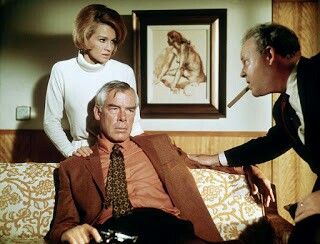
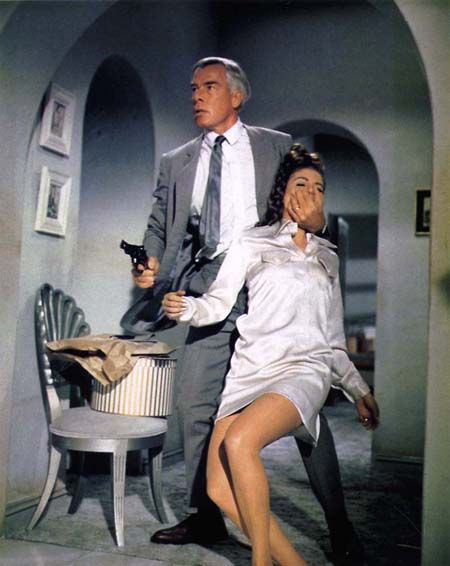
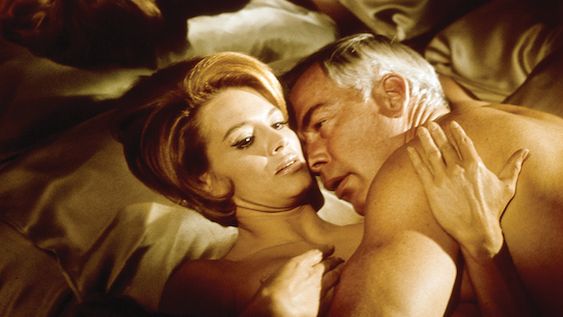
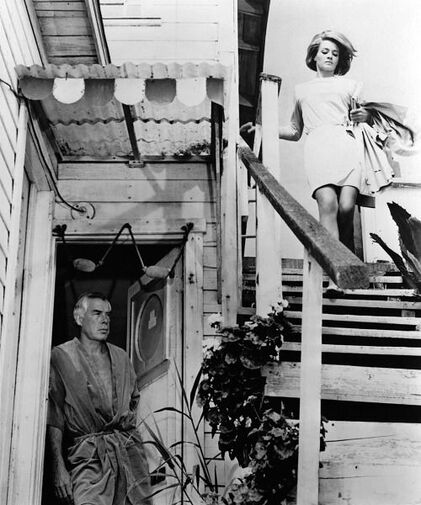
Again, it is Yost who provides the key to unlocking the proverbial cash box, but not before Walker spends a night with his sister-in-law Chris, played by Angie Dickinson. As she harangues him in voice over, eventually asking him “why don’t you just die,” then clocking him with a pool cue only to fall into bed with him, Boorman ratchets up the wish fulfillment elements by exchanging Chris for her sister Lynne in bed with first Walker and then Reece. The scene finally settles on Chris and Walker intertwined, complete with one last flashback to the prison shooting.
Brubaker, the top of the corporate pyramid, cannot understand Walker, questioning him by asking “you’re willing to bring down this financial institution for $93,000? What do you really want?” Walker’s bewildered response is simply “I want my money.” Brubaker is willing to find the one organization activity where large sums of cash are exchanged, the same prison deal that started Walker’s revenge in motion.
Again, it is Yost who provides the key to unlocking the proverbial cash box, but not before Walker spends a night with his sister-in-law Chris, played by Angie Dickinson. As she harangues him in voice over, eventually asking him “why don’t you just die,” then clocking him with a pool cue only to fall into bed with him, Boorman ratchets up the wish fulfillment elements by exchanging Chris for her sister Lynne in bed with first Walker and then Reece. The scene finally settles on Chris and Walker intertwined, complete with one last flashback to the prison shooting.
Brubaker, the top of the corporate pyramid, cannot understand Walker, questioning him by asking “you’re willing to bring down this financial institution for $93,000? What do you really want?” Walker’s bewildered response is simply “I want my money.” Brubaker is willing to find the one organization activity where large sums of cash are exchanged, the same prison deal that started Walker’s revenge in motion.
|
|
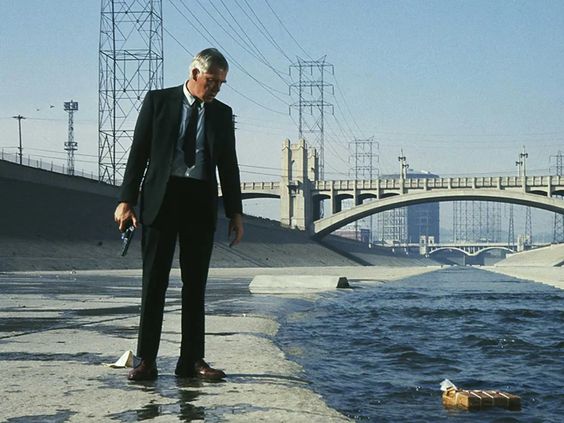
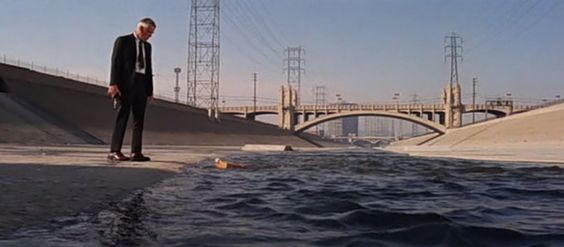
As double crosses go, the final scene is a classic. Brubaker may be on the up and up, but the organization/corporation can never be trusted. As Walker recedes into the darkness the money just lies there, where no one can have it. Walker can take it or leave it, but the implication is he’s done. He’s disappeared.
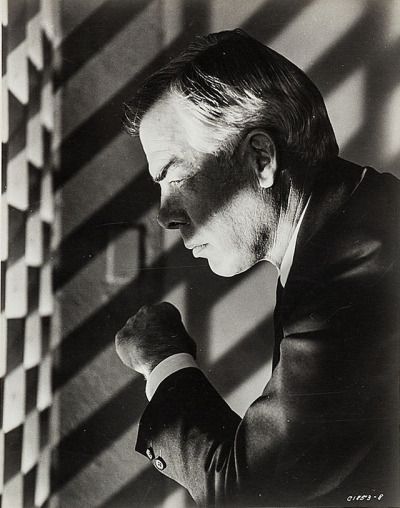
Marvin’s performance is one of perfection. A case where the character, the script and the actor seamlessly intertwine. Walker is a killing machine, who, while responsible for a carload of deaths, never actually kills anyone himself, instead allowing the corporation to destroy itself from within. There may be one man left standing, but who’s to say his tenure will be any longer than his predecessor. As a result, whether Point Blank is the fever dream of a dying man or the story of an avenging angel is probably immaterial.
Marvin’s performance is one of perfection. A case where the character, the script and the actor seamlessly intertwine. Walker is a killing machine, who, while responsible for a carload of deaths, never actually kills anyone himself, instead allowing the corporation to destroy itself from within. There may be one man left standing, but who’s to say his tenure will be any longer than his predecessor. As a result, whether Point Blank is the fever dream of a dying man or the story of an avenging angel is probably immaterial.